Ondo Finance put BlackRock's iShares Core S&P 500 ETF and Micron stock on-chain this week, the first third-party U.S. securities tokenized under a structure designed to operate within the existing regulatory framework. According to Ondo's announcement, the deployment uses Broadridge Financial Solutions to handle proxy voting and shareholder communications for token holders. Broadridge trades on the NYSE under BR and processes roughly $10 trillion in equity and fixed-income transactions annually, so the infrastructure credibility is real. The tokens are live. The question the market is not yet asking is: what can a holder do with them at the point of contact?
The Public Equity Wave Accelerates
Ondo's move lands in the middle of a tokenized-securities sprint. Last week Securitize debuted on the NYSE as SECZ and issued tokenized versions of its own shares on Solana and Avalanche, the first newly public company to do so on day one. Robinhood launched Robinhood Chain this week and passed $50 million in total value locked within days, with tokenized Coinbase shares (ticker COIN) available for 24/7 trading. Muriel Siebert & Co., a broker-dealer with roughly $19.5 billion in retail client assets, selected Tzero's infrastructure to enter the tokenized securities market. BNB Chain reported cumulative tokenized stock trading volume surpassing $5.2 billion, ahead of Solana, driven by more than 700 tokenized stocks and ETFs including Ondo, xStocks, and bStocks.
The pattern is consistent: equity is moving on-chain, and the pace is picking up. A retail investor can now hold a tokenized claim on the S&P 500, Micron, Securitize itself, or Coinbase, and that claim is portable, verifiable, and 24/7 tradeable. The same pattern repeats in private equity, where TokenCapStack puts the cap table on-chain at $200 per year versus Carta's $2,000-plus, using ERC-3643 security tokens with KYC and self-custody on Base mainnet. The ownership goes portable.
Portable Shares Create an Expectation
When equity becomes portable, holders begin to expect it will be recognized somewhere. A shareholder holding tokenized BlackRock ETF shares in their wallet is holding a verifiable claim on an S&P 500 position, anchored by Broadridge's transfer-agent infrastructure and Ondo's compliance layer. That claim travels with them. The wallet knows it. The blockchain knows it. The question is: does the cash register know it?
The industry treats tokenization as an issuance problem. Ondo, Securitize, Robinhood, Tzero, and the exchanges solved distribution. They built the rails to mint the asset, mirror the ownership, and enable trading. Recognition at the point of contact is a layer beyond what they built. It is not a criticism of what they shipped. It is the next step they did not scope.
The claim went portable. The door stayed locked.
Why the Redemption Layer Matters for Equity Holders
A holder of tokenized Coinbase shares on Robinhood Chain or tokenized BlackRock ETF shares via Ondo is holding a liquid, verifiable claim. Imagine that claim unlocked tiered discounts at the point of sale: Bronze tier for holders of $500 or more in tokenized equities, Silver for $2,000-plus, Gold for $10,000-plus, Platinum for $50,000-plus. Not a cash-out, not a sale, just recognition. Hold more, save more.
The counterfactual is straightforward. A restaurant, hotel, or retailer that partnered with Ondo or Robinhood to recognize tokenized equity holders at the register would be targeting customers who already hold liquid assets, demonstrated enough intent to move them on-chain, and are willing to prove it at checkout. That is not a mass-market discount. It is customer acquisition for high-intent, financially engaged customers. Advertising pays to guess who might care: an ad network charges per click, and the merchant hopes the click converts. Recognition works from the other direction. The holder already demonstrated economic alignment by moving capital on-chain, and reading the wallet at the door costs roughly $0.04 per scan. The ad buys a maybe. The scan confirms a yes that walked in on its own.
The same logic that applies to fan tokens and NFT holders applies to equity: the credential is portable, the holder wants utility, and the merchant wants pre-qualified traffic.
Why Merchants and Issuers Should Care
From the issuer side, Ondo now has token holders carrying verifiable claims on BlackRock and Micron. Securitize has shareholders holding tokenized SECZ. Robinhood has COIN holders trading 24/7. None of those claims do anything at the point of contact yet, because the redemption layer is outside the scope of what those platforms built. The gap is not their fault. It is the wedge.
A coffee shop, hotel chain, or travel platform that gave tiered discounts to holders of tokenized equities would immediately become the most interesting place for those holders to spend. The equity stays in the wallet. The discount happens at checkout. The merchant gets customers it could not afford to reach any other way. Token scanning beats Google Ads because the customer self-identifies, and the credential is already verified before they walk in.
This week also brought signals from the agent-commerce layer. OKX launched OKX AI, a marketplace where AI agents hire each other and settle payments autonomously. BNB Chain and AWS launched BNB Agent Studio, letting developers create AI agents with wallets, on-chain identities, and payments from a single prompt. Cloudflare opened a waitlist for Monetization Gateway, enabling developers to charge for APIs and tools via x402 stablecoin payments. eDreams ODIGEO partnered with Visa to let AI agents complete purchases on its travel platforms.
Agents need condition-based access as much as humans do. An agent holding tokenized equity or USDC should be able to access tiered pricing, just like a human wallet holder. The primitive is the same: read the wallet state, evaluate the condition, sign the result. InsumerAPI's AsterPay flow already combines token balance and Coinbase KYC attestations (EAS-anchored) to move agents from verified to trusted tier, with full ES256 JWT signatures and EUR settlement via SEPA Instant. Revettr scores counterparty risk across seven dimensions before x402 settlement, using POST /v1/trust. The agent economy and the tokenized-equity economy are converging on the same missing layer: recognition at the point of contact.
How Recognition Works at the Register
The Insumer Model does not tokenize equities. We assume everyone else will. We build the recognition layer those tokenized assets can use. It is condition-based access infrastructure. The primitive is simple: read wallet state, evaluate the condition, sign the result. The API returns a cryptographically signed boolean (yes or no), not a balance. No secrets, no identity-first authentication, no static credentials. The wallet holder proves what they hold without exposing how much.
For merchants, the flow is a register. A business configures tiered discounts (Bronze, Silver, Gold, Platinum) in a dashboard, mapped to token or equity thresholds. An employee opens InsumerScanner on any device. The customer shows a QR code or taps NFC. The wallet is read, the tier is evaluated, and a signed discount code is issued that the point-of-sale system validates before applying. It plugs into the systems merchants already run, and AI agents reach the same flow through the agent-commerce protocols. 37 chains, including Base (where Ondo and Robinhood deploy), Solana (where Securitize went live), XRPL, and Bitcoin. The details live on the merchant page.
The same rail extends beyond public equity. For communities and membership organizations, Bothy turns it into membership: one pass in each member's own wallet, recognized for gated content, member prices, and perks at the register. This is how token-gated access should work for real organizations. And for private companies, TokenCapStack makes the cap table portable and verifiable from day one, ready for the same recognition layer public equity is heading toward.
What Happens Next
Ondo tokenized the S&P 500. Securitize went public with tokenized shares live on day one. Robinhood launched a chain with 24/7 equity trading. Siebert, a 59-year-old broker-dealer, is entering the market. The wave is real, and it is not slowing down. The question is no longer whether equity goes on-chain. The question is: when does the holder get to use it?
Reading the wallet at the register is the move the industry keeps missing. Issuance is crowded. Recognition is nearly empty. The asset is not the innovation. Recognition is the innovation.
What can your tokenized equity unlock?
Shareholder discounts, tiers, holder-only access, and early allocations, verified by what the wallet holds across 37 chains. No roster to share, no points balance to issue.
See What It Unlocks ↗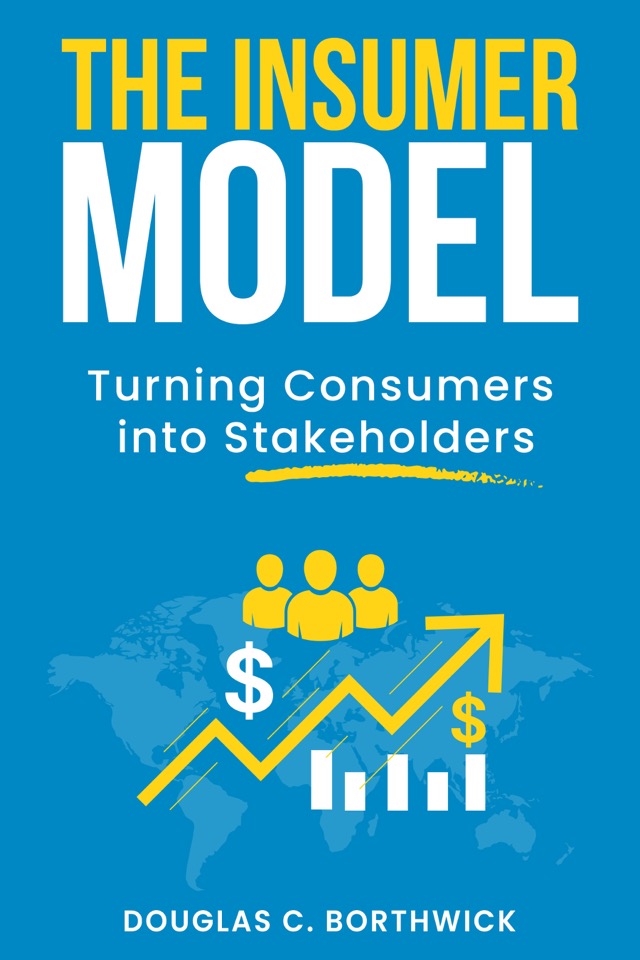
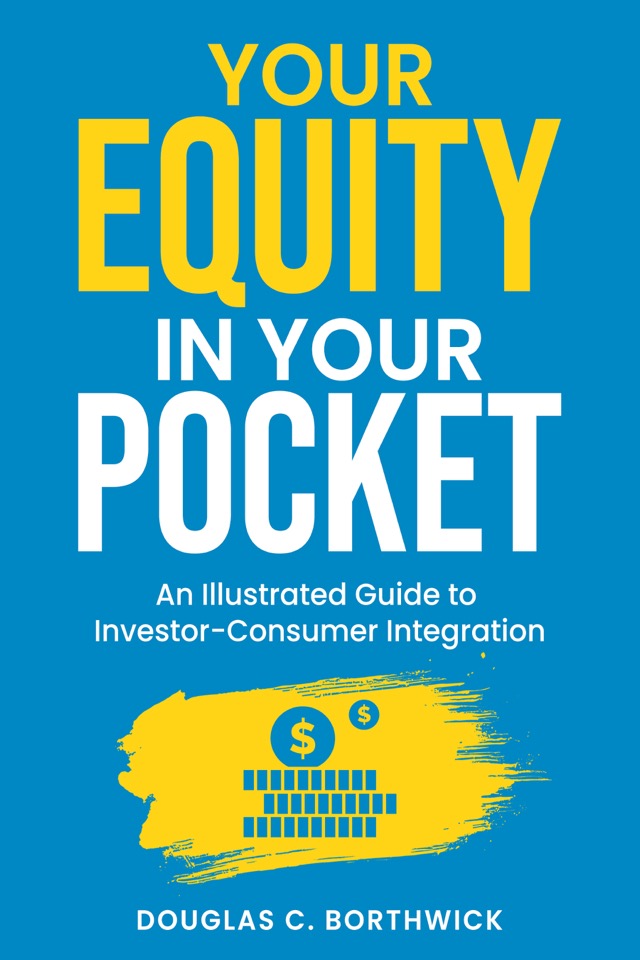
Let the holder use it. The books made that case first.
Douglas Borthwick has been making this argument at book length since before the infrastructure existed: ownership should be recognized at the point of contact, not just held. The second editions of both books are out now, updated for the tokenization wave, with new chapters on the recognition stack that shipped. The Insumer Model is the concept and the case. Your Equity in Your Pocket is the illustrated build.
Get every post by email
The Inevitable series and builder notes on condition-based access. Free, one or two posts a week.