Securitize is targeting a June 2026 NYSE debut through a $400 million SPAC merger, the tokenized-securities platform's clearest signal yet that on-chain equity is moving from niche to mainstream. The company has issued over $1 billion in digital securities across funds, private equity, and real estate; BlackRock's BUIDL fund alone holds north of $2 billion in tokenized Treasuries on the Securitize platform. The ownership records are portable, the tokens trade on secondary markets, and every holder address is visible on-chain. What none of them can do is walk into a conference, a co-working space, or a shareholder event and have the token recognize them at the door. The claim went portable. The perks stayed manual.
Why Public Listing Matters for Tokenized Equity
Securitize going public is not just a funding event. It is the industry's loudest statement that tokenized securities are no longer an experiment. When a platform that issues the tokens themselves lists on a traditional exchange, it drags the entire category closer to regulatory clarity and institutional adoption. The $400 million SPAC vehicle, the NYSE ticker, the audited financials: all of it says tokenized equity is real, compliant, and here to stay.
But portability and legitimacy are not the same as utility. A BlackRock BUIDL token proves you own a fraction of a Treasury fund. An on-chain private equity share proves you own a piece of a startup. A tokenized real estate token proves you own a slice of a property. None of them prove it to the systems that matter at the point of contact: the event check-in, the members' lounge, the investor perk at the register. The token travels, but recognition does not.
The asset is portable. Recognition is not.
This is the gap Securitize's public listing makes impossible to ignore. The more legitimate tokenized equity becomes, the more obvious it is that the token should do something beyond trade and vest.
The Other Issuers: Equity Goes On-Chain, But Stops at the Wallet
Securitize is not alone. The same week, Kraken's xStocks platform opened non-binding registration for the Bending Spoons IPO to eligible customers in the EEA and select global markets, the tokenized equities infrastructure's second pre-IPO offering after a troubled SpaceX debut. Atlas, backed by economist Nouriel Roubini, plans to launch USAFi in Q3 2026 under Dubai's VARA framework, a regulated permissionless digital security backed by a Nasdaq-listed ETF. In the UK, the BAGEY bond fund moved ownership records onto Ethereum and Solana, accessible 24/7, turning tokenization into a legal-record test.
Every one of these is an issuance story. The token gets minted, the cap table or fund registry goes on-chain, the holder address gets recorded. The pattern is the same: equity becomes portable, verifiable, and trackable. What none of them have built is the layer that reads the wallet at the register and returns a signed answer. Kraken's xStocks holders cannot use their Bending Spoons tokens to unlock early access to the company's apps. BAGEY bondholders cannot scan into a fixed-income investor conference with priority seating. USAFi holders, once live, will not be able to prove their stake to a Dubai co-working space offering tokenized-securities holders a discount.
This is not a criticism of what these platforms built. Issuance, custody, compliance, and secondary trading are hard, expensive, and necessary. But they are a layer outside the scope of recognition at the point of contact. The wallet holds the proof. The door stays locked.
Why Tokenized Equity Needs a Redemption Layer
The case for portable equity is well understood: lower settlement friction, 24/7 markets, programmable compliance, fractional ownership. The case for recognizing that equity at the point of contact is barely articulated, and it is the only move that turns a spreadsheet into a relationship.
Imagine a Securitize-issued real estate token that unlocks discounts at the property's on-site restaurant, priority booking for event space, or members-only rates at the affiliated hotel. Imagine BlackRock BUIDL holders walking into a financial conference and scanning their wallet for VIP access, not because they bought a separate pass, but because the token they already hold proves they are qualified. Imagine a private equity token issued on TokenCapStack, the blockchain-verified cap table platform that uses ERC-3643 on Base, giving startup shareholders early access to the company's product launches, investor-only pricing, or reserved seating at the company's annual meeting.
None of that happens today, not because the tokens do not exist, but because there is no infrastructure to read the wallet, evaluate the condition, and return a signed result that a door system, point-of-sale, or event scanner can trust. The issuer minted the token and walked away. The holder is left holding a claim that travels everywhere and opens nothing.
This is why token-gated commerce for equity is not a nice-to-have. It is the only thing that closes the loop between issuance and recognition. The claim went portable. Now make it redeemable.
The Two Sides of the Redemption Market
The conversation around tokenized equity utility usually centers on the holder: the shareholder wants perks, the investor wants access, the token holder wants the claim to mean something beyond a line in a wallet. That is half the story. The other half is the venue, the merchant, the event organizer who has every reason to recognize the token, and no tool to do it.
A conference hosting 5,000 financial professionals would pay to identify the BlackRock BUIDL holders in the room. Those are pre-qualified, high-intent customers: people who already moved capital into tokenized assets, who already understand on-chain finance, who are already the audience every booth and sponsor is trying to reach. Advertising pays to guess who might care: an ad network charges per click, and the sponsor hopes the click converts. Recognition works from the other direction. The holder already demonstrated economic alignment by moving capital into tokenized assets, and recognizing them at the door costs roughly $0.04 per scan. The ad buys a maybe. The scan confirms a yes that walked in on its own.
A co-working space in Dubai offering tokenized-securities holders a discount is not doing charity. It is customer acquisition. The USAFi holder, the BAGEY bondholder, the Securitize real estate investor: these are people with capital, compliance, and crypto literacy. They self-identify by showing the wallet. The space does not need to buy an ad, run a referral program, or guess who in the room is worth targeting. The token holder walks in already holding the credential.
This is the economic argument for recognition infrastructure, and it runs in both directions. The holder wants utility. The merchant wants traffic. The gap between them is not philosophical. It is technical. Someone has to read the wallet, evaluate the condition, and sign the result. That someone is not the issuer.
What Reading the Wallet at the Register Actually Looks Like
Recognition at the point of contact is not abstract. It is a sequence: read wallet state, evaluate the condition, sign the result. POST /v1/attest returns a cryptographically signed boolean, verified yes or no, no balance exposed. The holder shows a QR code or taps NFC. The scanner reads the wallet address, checks whether it meets the threshold, and issues a signed discount code or access credential that the point-of-sale or door system validates before honoring.
For tokenized securities, the mechanic is the same, but the condition is KYC-gated. The wallet must hold the token AND satisfy compliance requirements, typically anchored in an EAS attestation like Coinbase KYC or Coinbase Verified Country. The register evaluates both: does this wallet hold the BUIDL token, and is the holder Coinbase-verified? If yes, the signed boolean unlocks the tier. If no, the scan returns nothing. No secrets, no identity-first flow, no static credentials.
This is how tokenized securities get real-world utility. The same pattern works in private equity, where TokenCapStack puts the cap table on-chain, and in fan and membership relationships, where a community using Bothy creates one pass, sends it to its people, and every tool recognizes it: gated content, member prices in the store, perks at the register. The primitive is the same. The issuer changes.
The cost is $0.02 to $0.04 per verification, with 100 free scans to start. Point-of-sale integrations with Square and Stripe are live; Clover is pending. AI-agent checkout is supported natively through the OpenAI ACP and Google UCP commerce protocols. The rail exists. The industry has not used it.
What Securitize's NYSE Debut Should Trigger
Securitize going public is the clearest proof yet that tokenized securities are not going away. The question is no longer whether equity goes on-chain. The question is what happens next. Does the token sit in the wallet as a tradable claim, or does it unlock something at the register, the door, the event, the co-working space?
The issuers solved distribution. Securitize, Kraken, Atlas, BAGEY, and dozens of others have built the rails to mint, custody, and trade tokenized equity. What they have not built, and what sits outside the scope of what they are building, is the layer that reads the wallet at the point of contact and returns a signed result. That is a different problem, and it is the only problem that turns a portable claim into a redeemable one.
Issuance made ownership portable. Recognition makes it useful. The industry keeps missing it.
What can your tokenized equity unlock?
Shareholder discounts, tiers, holder-only access, and early allocations, verified by what the wallet holds across 38 chains. No roster to share, no points balance to issue.
See What It Unlocks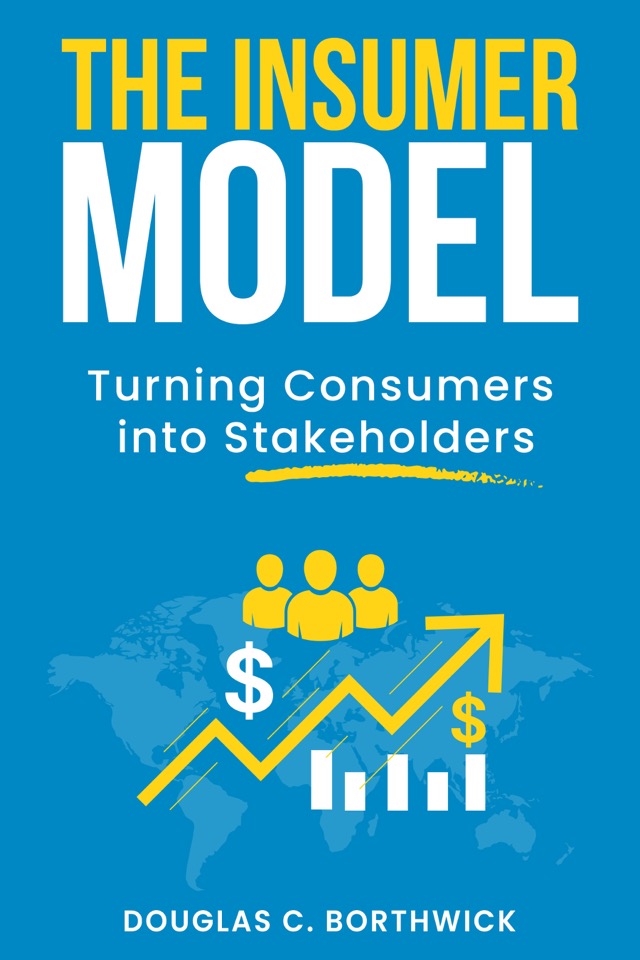
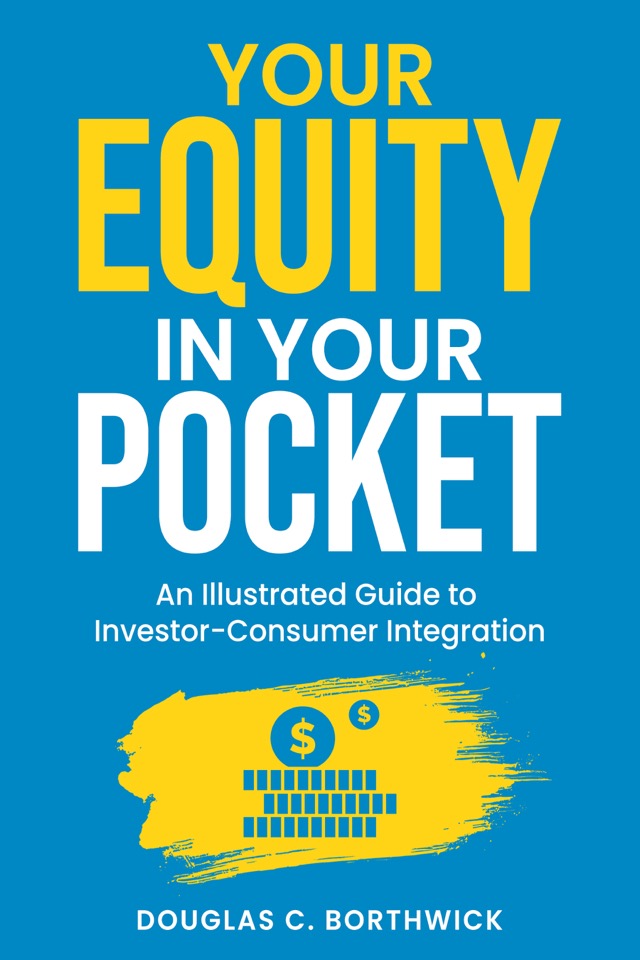
The redemption gap has a book-length answer.
Douglas Borthwick has been mapping the fix since before the infrastructure existed: ownership that gets recognized at the point of contact, not just issued. The second editions of both books are out now, updated for the tokenization wave, with new chapters on the recognition stack that shipped. The Insumer Model is the concept and the case. Your Equity in Your Pocket is the illustrated build.
Get every post by email
The Inevitable series and builder notes on condition-based access. Free, one or two posts a week.